
Bible covers and binding: what to look for
Two things decide how long a Bible lasts: its cover and its binding. Product pages use words like genuine, bonded, top-grain, PU or Smyth-sewn without explaining them. This guide explains what each one means, how to check a Bible before you buy, and how our two covers compare.
Bible cover materials, explained
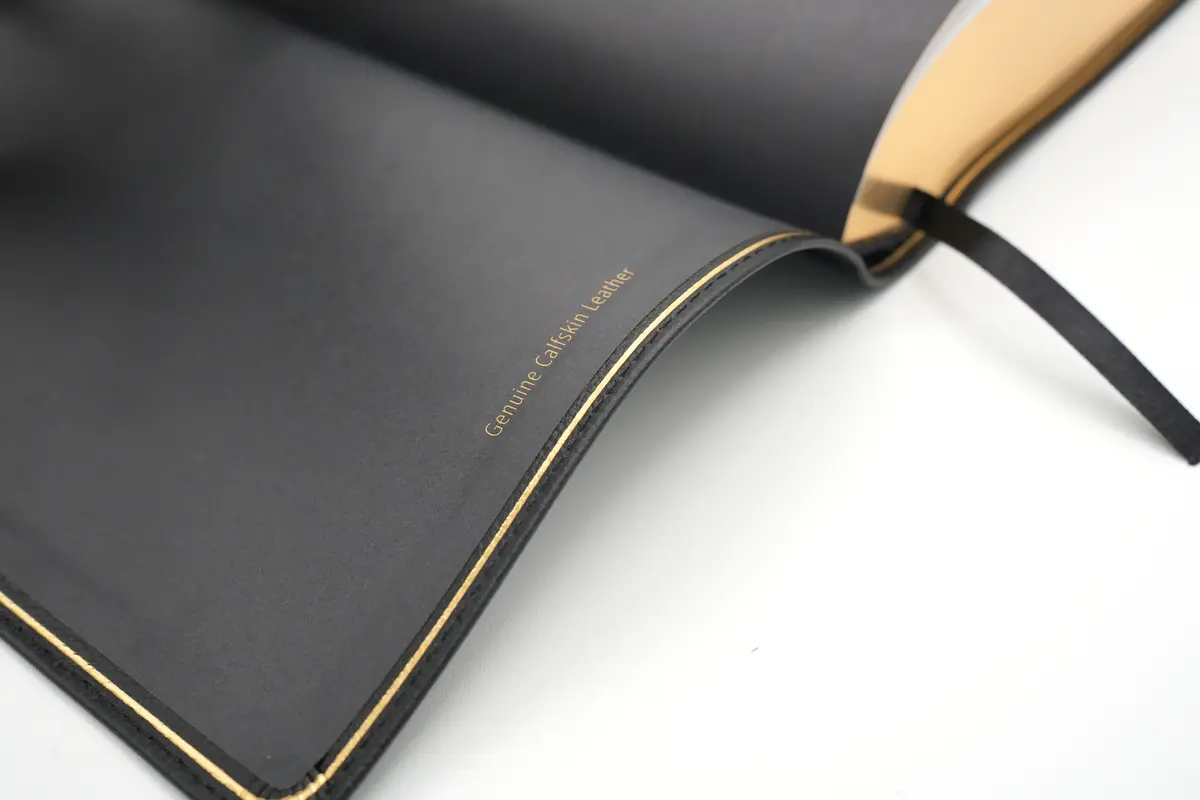
- Genuine leather. Real animal hide: calfskin, goatskin or cowhide. “Full-grain” and “top-grain” describe the top layer of the hide, the strongest part. A genuine leather cover is soft, flexible and gets better with age. It costs more, and it lasts the longest.
- Bonded leather. Leftover leather scraps and fibers, ground up and glued onto a backing, with a finished surface on top. It looks like leather when new, but it is mostly glue and backing.
- Synthetic covers. Covers made without leather, sold under names like PU, faux leather, leathersoft or “vegan leather”. Quality varies a lot. A good one is flexible, light, easy to clean and comes in many colors.
- Hardcover and cloth. Rigid boards, usually covered in paper or cloth. Sturdy on a shelf or a pulpit, but they don’t bend, so they are less comfortable to hold and to carry.
Why bonded leather has a bad reputation
Bonded leather is the cover most people regret. Because the surface is a coating over glued fibers, it tends to crack and peel after a few years of use, first at the spine and the corners, where the cover bends the most. Once it starts, it can’t be repaired.
That is why we don’t use bonded leather on any of our Bibles. Our premium editions are genuine calfskin, and our standard editions use SP Signature Grain, a synthetic cover chosen to flex and wear well.
Our two covers: calfskin and SP Signature Grain
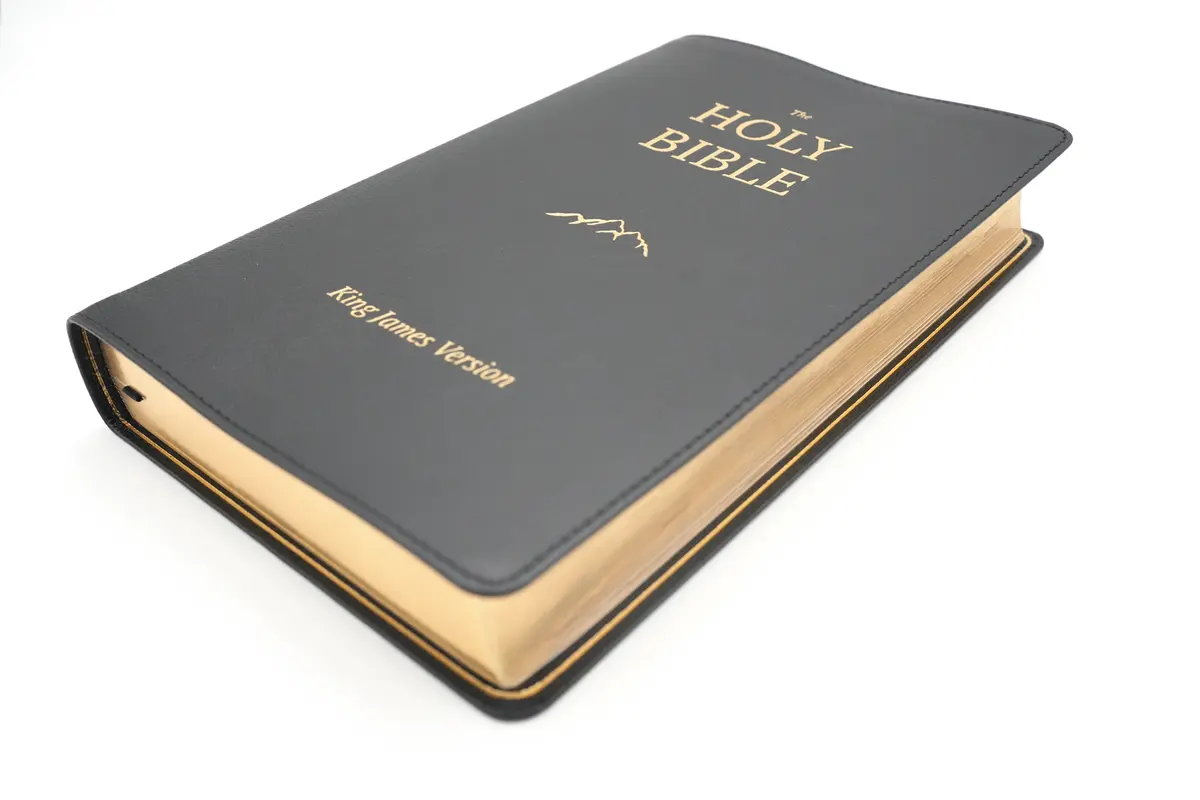
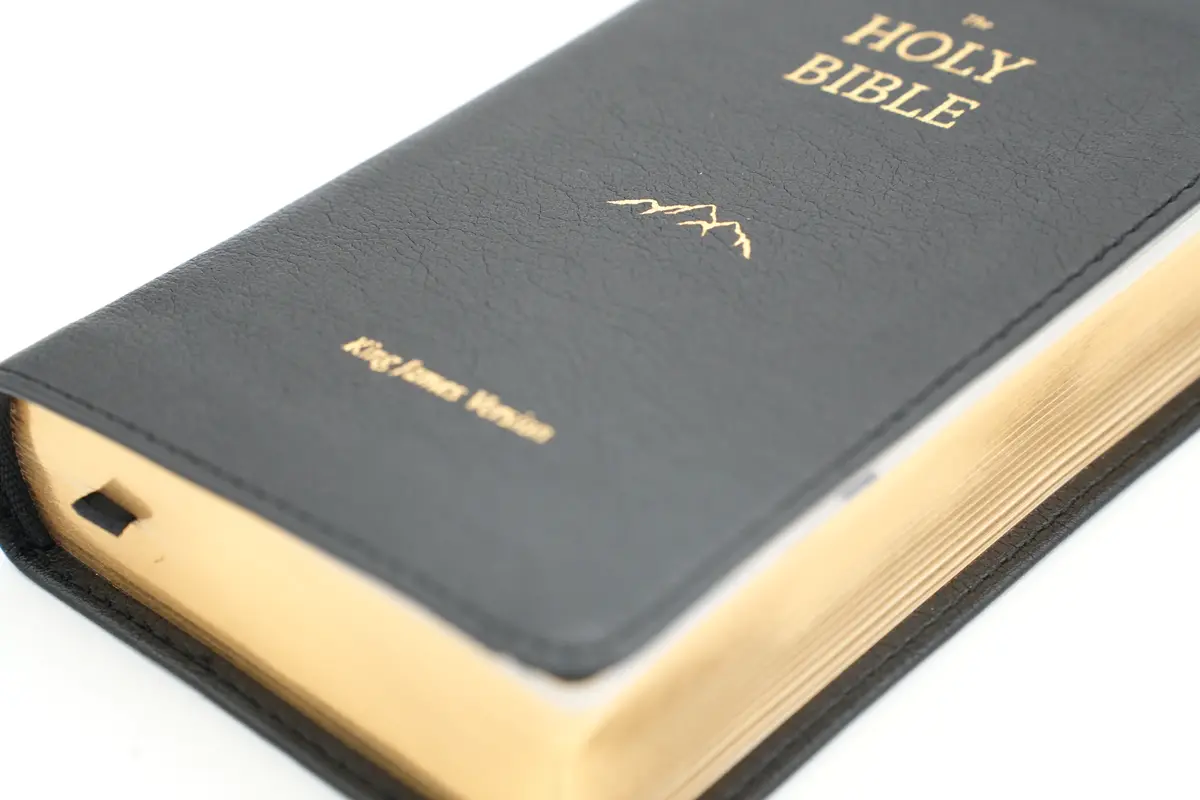
Every Saintilway Bible is made the same way inside: the same paper, typesetting and binding. The difference between our premium and standard editions is the cover, the gilt line, the packaging and the warranty.
Our two covers compared
| Premium | Standard | |
|---|---|---|
| Material | Genuine calfskin | SP Signature Grain, our own synthetic grain cover |
| Feel | Soft, supple, natural grain | Flexible and light, with a fine grain |
| Over time | Gets softer and develops a patina | Keeps its look; wipes clean with a damp cloth |
| Perimeter stitching | Yes | Yes |
| Gilt line inside the cover | Yes | No |
| Warranty | Limited lifetime | 2-year limited |
| Packaging | Two-piece box | Slipcase |
| Colors | Up to 8 | Up to 12 |
What every edition has, whatever the cover:
- A Smyth-sewn binding that lies flat.
- Thin, high-opacity paper.
- Gold gilded page edges and rounded corners.
- A ribbon marker that matches the cover.
- The words of Jesus in red and a presentation page.
Which cover each edition comes in
| Bible | Genuine calfskin | SP Signature Grain |
|---|---|---|
| KJV Micro | 12 colors (coming March 2027) | |
| KJV Pocket | 8 colors | |
| KJV Compact | 8 colors | |
| KJV Personal | 8 colors | |
| Louis Segond Compact | 8 colors | 4 colors |
| Louis Segond Personal | 8 colors | 12 colors |
| Louis Segond Giant | 12 colors (coming July 2027) |
What a Smyth-sewn binding means
A Bible is printed on large sheets that are folded into sections of pages, called signatures. In a Smyth-sewn binding, each signature is sewn through its fold with thread, and the signatures are sewn to each other before the book block goes into its cover.
In a glued binding (often called “perfect binding”), the folds are cut off and the loose pages are held only by glue along the spine. It is cheaper and faster, but glue gets stiff, so the Bible won’t stay open by itself, and with daily use pages can work loose.
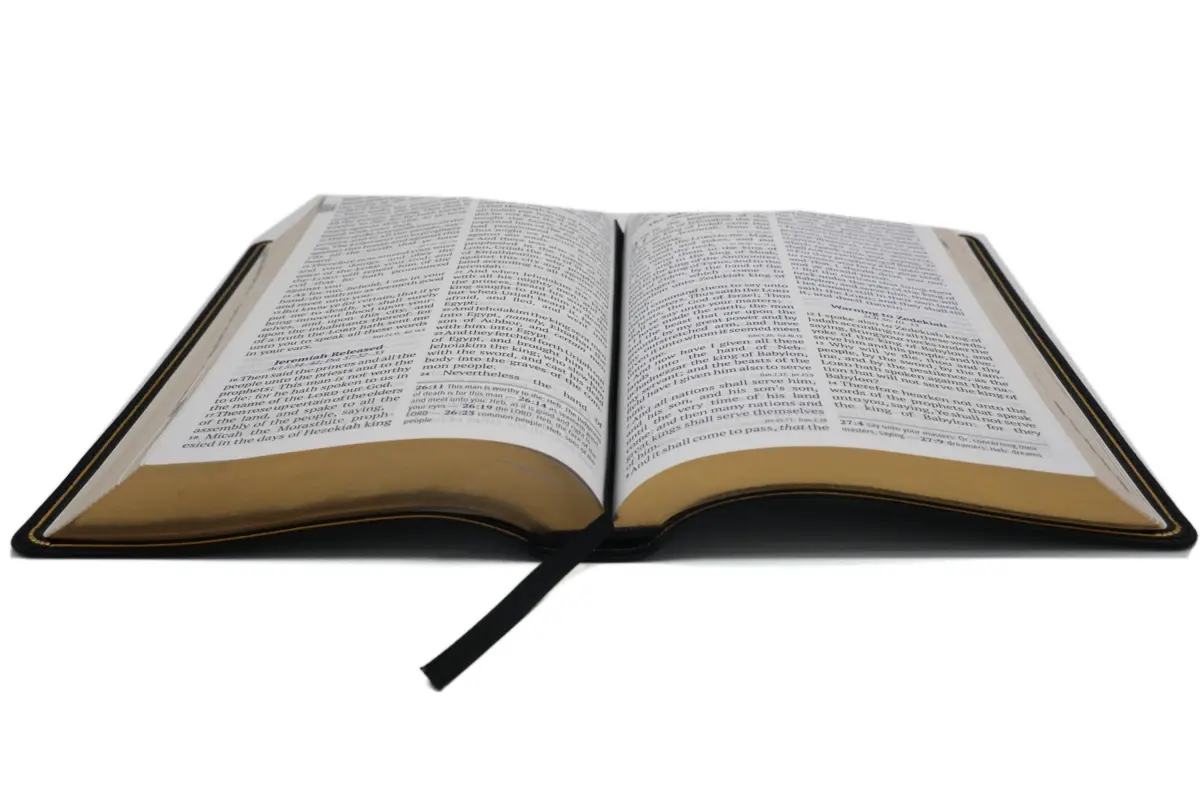
A sewn Bible lies flat when you open it, even near the first and last pages, and it holds together for decades of reading. For a book you open every day, it is the one feature we would never skip.
How to check a Bible’s binding
- Read the specifications. Look for “Smyth-sewn” or “sewn binding”. If the listing says “glued”, “perfect bound” or says nothing at all, it is probably glued.
- Open it in the middle. A sewn Bible lies flat on a table. A glued one springs back or needs to be held open.
- Look closely at the gutter. In the center of a signature you can often see the thread running through the fold.
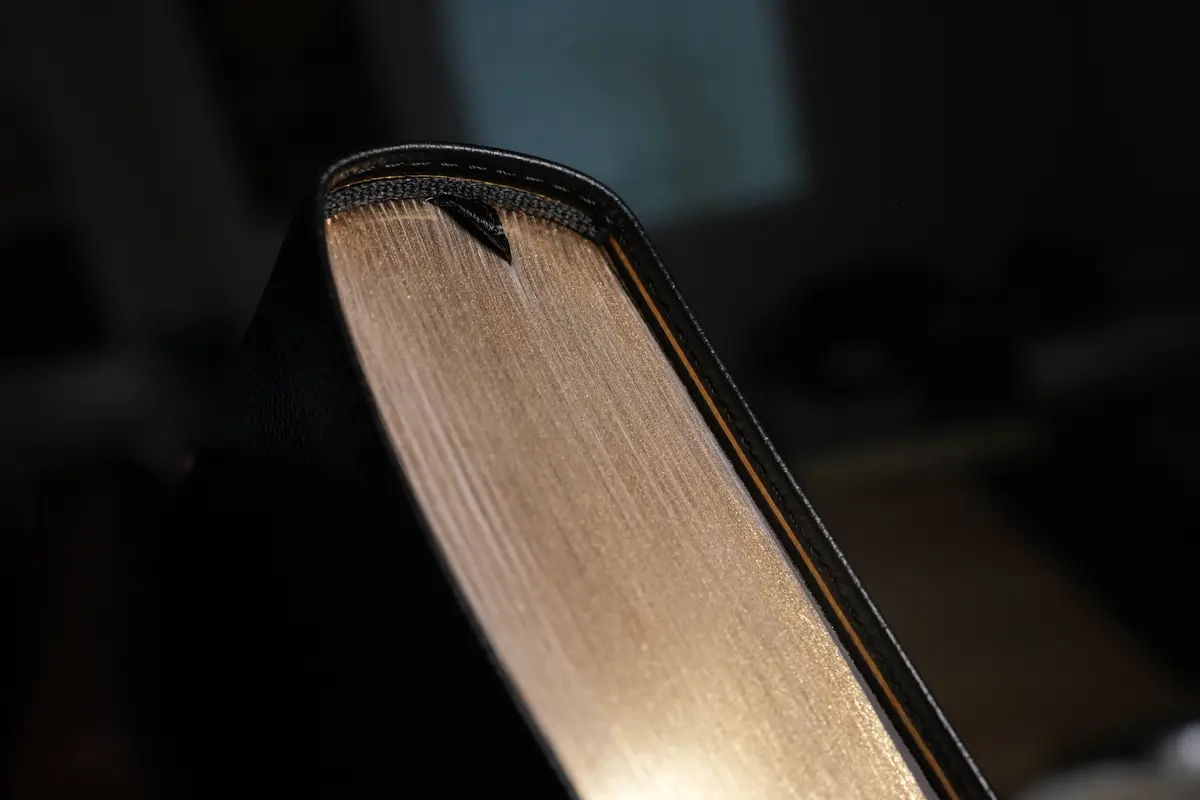
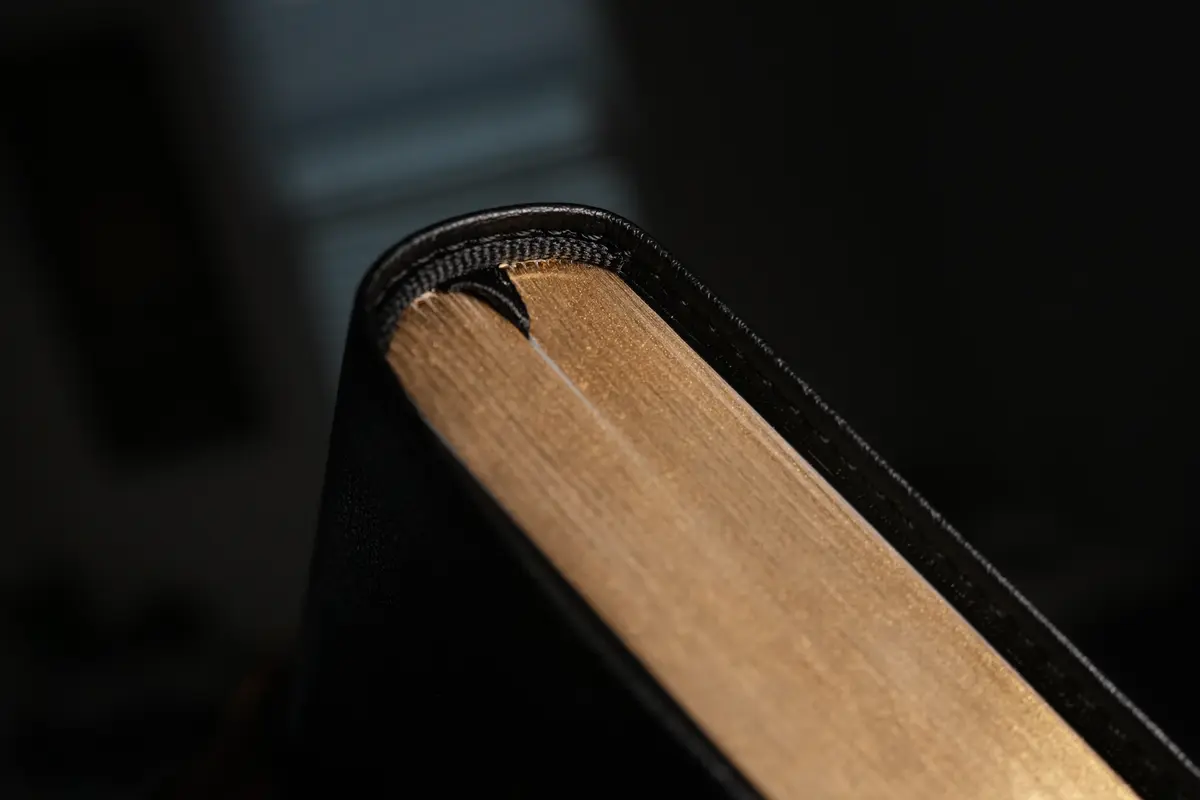
- Look at the top of the spine. On a sewn Bible, the edges of the signatures make small bundles of pages, usually behind a cloth headband.
Which cover to choose
- For a Bible to keep for life, or a gift for a baptism, a wedding or an ordination: genuine calfskin. It gets better every year and has our limited lifetime warranty.
- For everyday carrying, a first Bible, a teenager or a church group: SP Signature Grain. It is light, easy to clean and comes in more colors.
- For a reader who wants the best of both: the binding and paper are the same, so choose the cover you will enjoy holding.
Then choose the size: Bible sizes compared
Taking care of your cover
Keep your Bible away from heat and direct sun: don’t leave it in a hot car or on a radiator. Wipe SP Signature Grain with a soft, damp cloth. Dust calfskin with a soft, dry cloth, and if it gets wet, let it dry slowly at room temperature, never with a hair dryer.
Our warranty
Our premium calfskin Bibles have a limited lifetime warranty, and our SP Signature Grain Bibles a 2-year limited warranty, against binding, cover and printing defects. If there is a problem, we replace the Bible for free and pay the shipping. The warranty covers Bibles bought from Saintilway Productions: on this website, or in our Amazon and eBay stores.
Where to buy
Order on this website and we ship from Orlando, Florida, in 1–2 business days, anywhere in the US. Shipping is free on orders of $49 or more, and you can return an order within 30 days of delivery. Our Bibles are also in our Amazon store, at the same prices.
See our BiblesOrder for a church or a groupAsk us a question